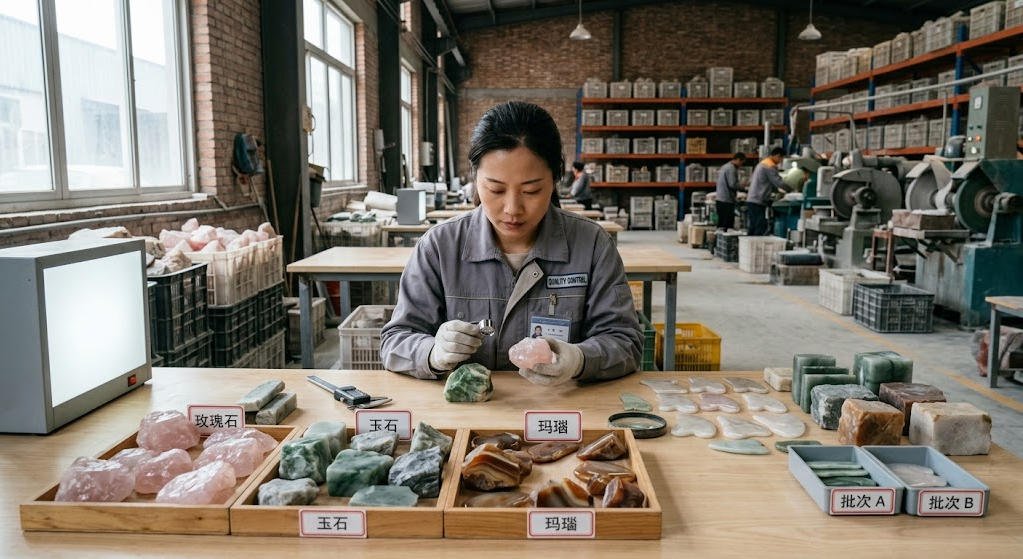
If you have ever placed a gua sha wholesale order and received a shipment that looked slightly different from the sample on your desk, you are not dealing with a defect. You are dealing with a physical reality of natural stone: even from the same mine, the same supplier, and even after more than 12 years of running natural crystal and jade production lines, no two batches of rose quartz, jade, or agate come out chemically identical. Independent gemological references such as the GIA rose quartz overview note that color and clarity in natural quartz shift from stone to stone because inclusions, mineral traces, and crystal growth are never uniform — a fact that applies directly to the raw material behind every gua sha manufacturer‘s production line. This is the first thing worth knowing before your next order goes out: the real question in gua sha wholesale sourcing was never “will there be variation,” it’s “can your supplier keep that variation inside a range you can plan around.” That distinction is what separates a controlled gua sha wholesale risks profile from an unpredictable one, and it’s what this article breaks down, section by section, from the mine to your shelf.
- 3 Things to Confirm Before You Place a Gua Sha Wholesale Order
- Why Gua Sha Wholesale Batches Vary Even From the Same Source
- Inside Gua Sha Production: How Consistency Actually Gets Built
- How to Lower Gua Sha Wholesale Risks Before You Sign the Order
- What Inconsistent Batches Actually Cost a Gua Sha Wholesale Buyer
- Gua Sha Wholesale Compliance: Grading Standards You Can Verify
- Twelve Years Supplying the Gua Sha Wholesale Market From the Factory Floor
- FAQs About Deyi Gems Batch VAriation
3 Things to Confirm Before You Place a Gua Sha Wholesale Order
Before you compare price sheets or minimum order quantities, you need three answers. Get them first, because they change how every other conversation with a gua sha manufacturer goes.
Same Material Name Does Not Mean Same Batch
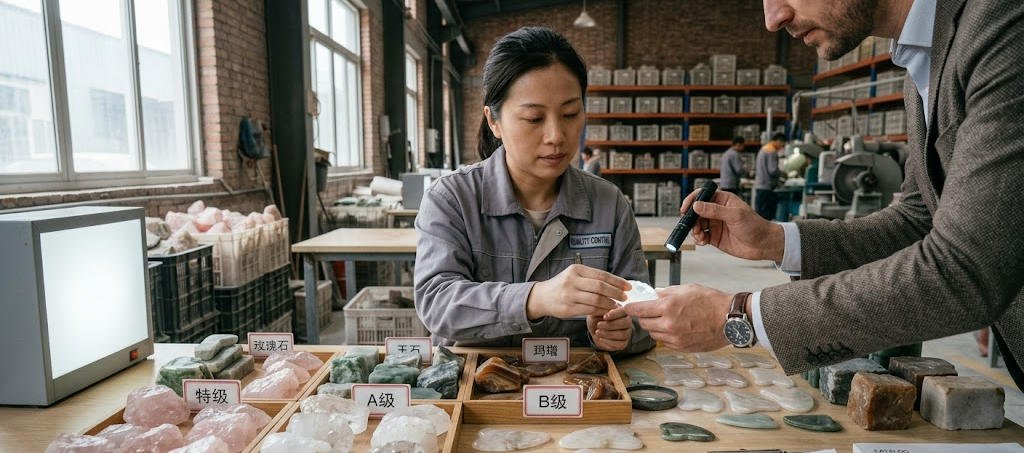
“White crystal” is not a specification. It’s a starting point. One batch might come out with high clarity and a visible crystalline structure, while another batch of the same white quartz reads as cloudier and more opaque — both are genuine material, and both are correctly labeled. You need the batch description to go further than the stone’s common name, because the name alone tells you almost nothing about what will arrive at your dock. This means you can stop treating “same material” as a guarantee and start treating it as the beginning of a specification, not the end of one.
Material Grade Decides More Than the Name on the Invoice
A supplier filling a boutique brand’s order and a supplier filling a bulk gua sha wholesale order may pull from the same quarry but not the same pile of rough. Higher-grade rough gets reserved for orders that specify tighter color and clarity tolerances; commercial-grade rough, with its natural texture and minor variation, goes to standard bulk runs. Neither grade is “wrong” — they are simply built for different buyer expectations. So what does this mean for your purchase order? It means the grade you request, in writing, has more influence on consistency than the number of pieces you order or the price per unit you negotiate.
What a Reliable Guasha Tools Manufacturer Should Tell You Upfront
A factory that understands its own material will tell you, before you sign anything, which of the variations above apply to your specific order — color range, translucency range, and expected natural texture. If a guasha tools manufacturer cannot describe these ranges without vague language like “mostly consistent” or “very similar,” that’s a signal worth noting, not ignoring. You deserve a written description you can hold the shipment against, not a verbal reassurance you can’t reference later. It also helps to ask whether gua sha production happens on the same site as material sorting, because a guasha tools manufacturer that grades and cuts under one roof can answer your questions about a specific batch in hours, while a factory that outsources cutting to a third party often has to relay your question and wait for a reply before it can tell you anything useful.
Why Gua Sha Wholesale Batches Vary Even From the Same Source
Here’s the part most buyers skip past, and it’s the part that actually explains the invoice you received last quarter. Natural stone forms underground, over long timescales, under conditions that are never perfectly repeated — not even within the same deposit.
Rough Stone Cannot Be Copied, Only Selected
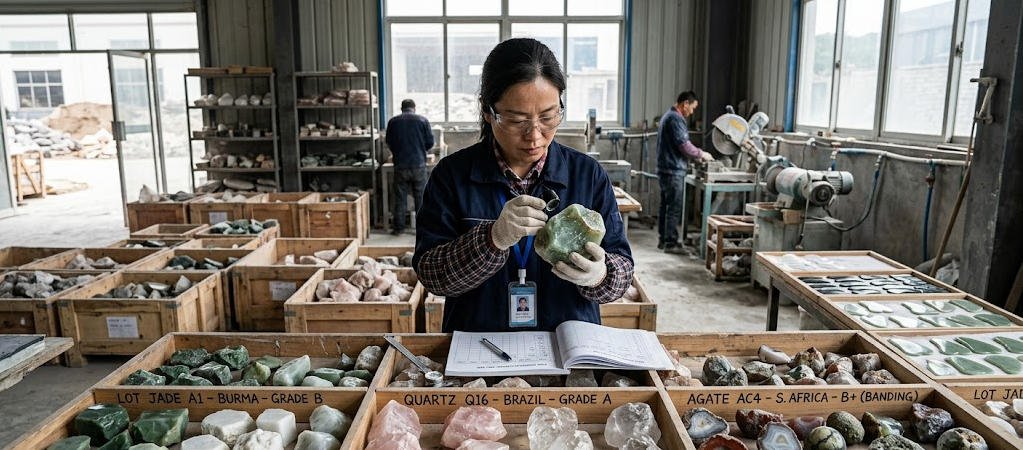
Every piece of rough quartz, jade, or agate carries the fingerprint of the geological conditions where it formed: mineral ratio, crystallization pattern, inclusion density, and internal texture all vary by location within a single deposit, sometimes by a few meters. A gua sha manufacturer cannot manufacture uniformity into rough stone the way a plastics factory can mold identical polymer pellets. What a factory can do is select rough that fits a target range — which is a very different, and more honest, promise than “identical every time.” This means you can expect natural variation within a defined band, not a flat, factory-molded sameness that natural stone was never built to deliver.
The Rough-Buying Stage Already Decides the Outcome
Here’s a detail most buyers never see: gua sha production doesn’t start with a finished-goods order sheet, it starts with a rough-material purchase, often weeks or months earlier. Rough bought in March and rough bought in September from the same mine can carry different color depth, different transparency, and a different number of natural fissures, because rough purchasing follows what the quarry produces that month, not a catalog. By the time your purchase order is written, the color range of your batch has already been set at the rough stage — production only reveals it. So what’s the practical takeaway? Ask your supplier when the rough for your order was purchased and whether it came from a single lot, because that single fact predicts more about your shipment’s consistency than any spec sheet.
Natural Stone Has No Pantone Chart, and Cutting Adds a Second Layer
Industrial products lean on Pantone or RGB codes for color matching, but natural stone doesn’t have that option — a “white” batch might land anywhere from icy white to milky white to a faint grey-white, and all of it is accurately called white quartz. On top of that, processing choices compound the picture: polishing duration affects surface shine, the degree of matte sanding affects how translucent a piece looks, and cutting orientation relative to the crystal’s internal structure changes how light refracts through the stone. Two pieces cut from the same rough block can look noticeably different depending on which face the cutter chose to expose. This means your specification needs to describe color using graded language — such as icy white, milky white, or grey-white — rather than a single word, because a single word leaves too much room for two honest interpretations of the same material.
Same Supplier, Different Grades for Different Orders
Here’s something worth sitting with for a moment: the same factory can ship two visibly different versions of “the same product” in the same month, and both can be entirely legitimate. A boutique brand placing a smaller, higher-margin order typically gets rough selected for even color and minimal inclusion, while a standard gua sha wholesale order, priced for volume, is filled with commercial-grade rough that carries natural texture and minor variation the buyer has implicitly accepted through the price point. Neither shipment is a downgrade — they’re two different specifications drawn from the same mine. So the real question to ask a guasha tools manufacturer isn’t “do you use good material,” it’s “which grade tier does my order fall into, and how is that tier defined.” Knowing your tier before the batch is cut is worth more than any assurance you’ll hear after it ships, and it’s one of the fastest ways to bring gua sha wholesale risks down before a single piece is cut.
Inside Gua Sha Production: How Consistency Actually Gets Built
A factory can’t remove variation from natural stone. What it can do is manage variation the way any serious manufacturing operation manages a variable input — with process, not luck. This is the actual difference between a guasha tools manufacturer you can build a repeat order schedule around and one you’re gambling on every quarter, and it comes down to a handful of concrete steps inside gua sha production, not a marketing claim about quality.
Locking Down the Rough Material Source
The first control point sits before any cutting happens: which mine, which supplier, and which purchasing relationship the rough comes from. A gua sha manufacturer that rotates suppliers freely, chasing the lowest rough price each month, introduces a new variable into every batch. A factory that maintains a small number of long-term rough relationships, and keeps records of what each source typically produces, starts every batch from a narrower baseline. This means your reorders six months from now are more likely to match your first shipment, because the raw-material starting point hasn’t shifted underneath you.
Grading Rough Material Before Cutting Begins
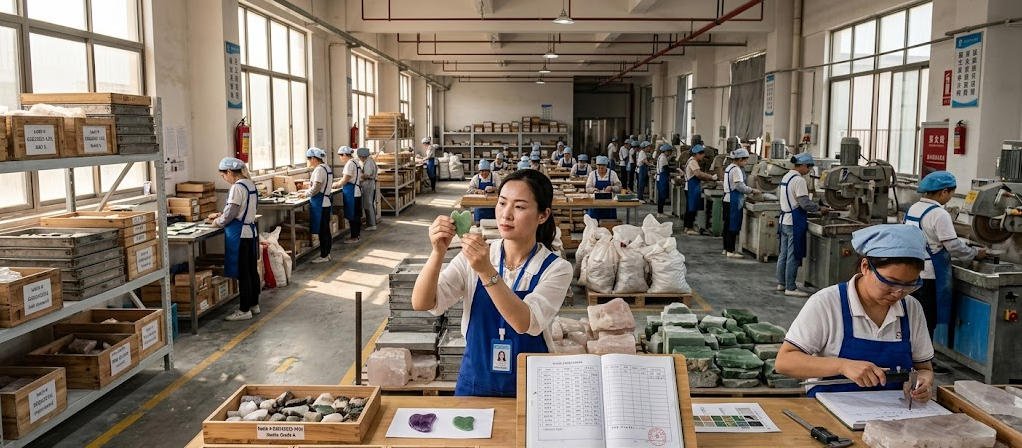
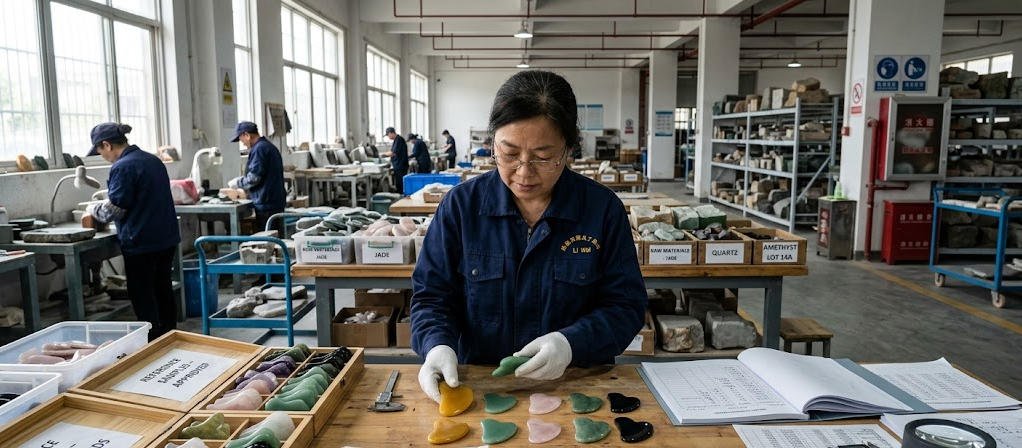
Once rough arrives at the workshop, it gets sorted — typically into something like an A, B, and C tier — based on color evenness, transparency, crack count, and inclusion visibility. A-tier rough shows even color and high transparency with few cracks; B-tier carries light texture and minor color shift; C-tier shows uneven color or more visible inclusions. Sorting happens before cutting, not after, which matters more than it sounds: a factory that only inspects finished pieces is discovering problems after labor and material have already been spent on them. So what does that mean for your order timeline? It means fewer surprise rejections at final inspection, because the weak material was already pulled out three steps earlier.
Keeping a Retained Sample for Every Gua Sha Wholesale Batch
Every production run should leave behind a physical record: a retained sample piece, photographs of the rough it came from, and photographs of the finished product, tied to a batch number. When your next gua sha wholesale order comes in, that retained sample becomes the reference point — not memory, not a general description, an actual physical object your new batch gets checked against. Over a year of repeat orders, this retained-sample archive is what keeps your fifth reorder recognizably close to your first one. This means you can request to see the retained sample from your previous order before approving a new one, and a guasha tools manufacturer with a real system will have it ready in minutes, not days.
Controlling Size and Shape Consistency
Color and texture aren’t the only variables a buyer notices — dimensions matter just as much, especially when your gua sha tools sit in a display alongside dozens of identical-looking pieces. A guasha tools manufacturer controls this through fixed molds, cutting jigs, and dimensional checks on length, width, thickness, curve, and edge roundness, rather than relying on a cutter’s hand judgment for every single piece. Without those tools, even skilled cutters drift slightly over the course of a long production run, and that drift compounds across a large order. This means the pieces in your shipment should sit within a measured tolerance on size and shape, not just look similar at a glance — and it’s a fair question to ask any gua sha production partner how that tolerance is measured and recorded.
3 Checkpoints Before Anything Ships: IQC, IPQC, OQC
Serious gua sha production runs three separate checks rather than one. Incoming Quality Control (IQC) verifies the rough material before it enters the workshop. In-Process Quality Control (IPQC) checks dimensions, surface finish, and shape consistency while cutting and polishing are underway. Outgoing Quality Control (OQC) inspects the finished, packed product against the agreed specification right before it leaves the building. Three checkpoints catch different failure types — IQC catches bad rough, IPQC catches process drift mid-run, and OQC catches anything that slipped through both. This means a rejected piece is far more likely to be caught on the factory floor than in your warehouse, which is a much cheaper place for a problem to surface.
How to Lower Gua Sha Wholesale Risks Before You Sign the Order
Everything above describes what a factory should be doing. Here’s what you, as the buyer, can actually require — before the purchase order, not after the shipment arrives.
Ask for a Golden Sample in Writing
A Golden Sample is a physical reference piece both sides agree represents the acceptable standard, and it should be confirmed in writing, not just handed over informally. Once that sample exists, every future batch gets measured against it, and disagreements about “is this within range” have an actual object to point to instead of two people’s memory of a photo from six months ago. So why does this reduce gua sha wholesale risks more than almost any other single step? Because it converts a subjective argument into an objective comparison, and objective comparisons are what prevent disputes from escalating after a container has already shipped.
Put Material Grade in the Contract, Not Just the Material Name
“Rose quartz” tells a factory almost nothing about your tolerance for color variation; “Rose quartz, Grade A, light-to-medium pink, minimal visible inclusion” tells them exactly what to sort for. This means the sentence you add to your purchase order — specifying grade, color range, and acceptable texture — does more to protect your shipment quality than any amount of back-and-forth negotiation on price. Isn’t a single clear sentence in a contract cheaper than a rejected container three months later? For most buyers, the math isn’t close.
Lock Your Rough Material Early for Large Gua Sha Wholesale Orders
If you’re placing a large or recurring order, ask your supplier to purchase and reserve rough material for your batch in advance, rather than sourcing it order by order. This single request does more to bring down gua sha wholesale risks across repeat purchases than almost anything else on this list, because it removes the month-to-month variability in what rough happens to be available when your PO lands. This means your Q3 reorder can be cut from material set aside back in Q1, which is exactly how a factory keeps a full year of shipments visually aligned.
A Digital Record Lowers Gua Sha Wholesale Risks Over Time
A factory serious about lowering gua sha wholesale risks keeps more than paper notes — it keeps a searchable digital record for every batch: material source, batch number, photos of the rough and the finished pieces, the buyer’s confirmed standard, and the inspection results. Six months from now, when you’re deciding whether to reorder, that record lets your supplier pull up exactly what shipped to you last time in minutes instead of digging through a filing cabinet or, worse, guessing. So what’s the practical ask here? Request that your batch data be logged digitally, with photos, at the time of production — not reconstructed from memory after you’ve already asked for it, which is when details tend to go missing.
What Inconsistent Batches Actually Cost a Gua Sha Wholesale Buyer
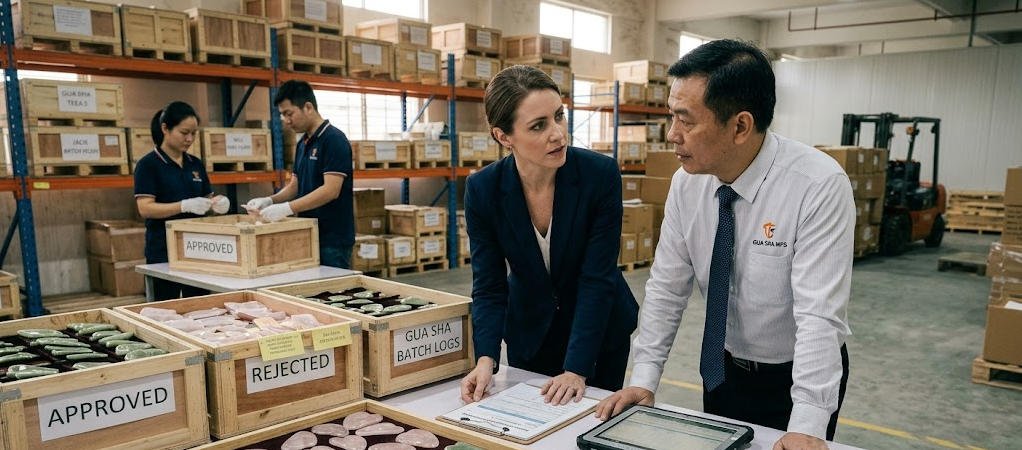
Batch inconsistency isn’t just a visual annoyance — it shows up as a line item, whether or not anyone labels it that way on a spreadsheet. Once you start tracking where that cost hides, it usually shows up in two places: rejected shipments, and the reorder delay that follows them.
The Hidden Cost of Rejected Shipments and Reorder Delays
A rejected or returned batch doesn’t just cost the value of the goods; it costs the freight both directions, the warehouse space it occupied while under dispute, and the weeks it takes to cut, grade, and ship a replacement batch from scratch. For a buyer running a retail launch or a seasonal promotion, a replacement cycle running four to eight weeks can mean missing the sales window entirely, which is a cost no invoice line ever captures. This means the real price of unmanaged gua sha wholesale risks isn’t the rejected units — it’s the sales window you lose while you wait for a corrected batch to clear production and shipping.
Why Prevention Is Cheaper Than Correction
A Golden Sample, a written grade specification, and a locked rough-material batch cost you almost nothing to request — they’re conversations you have before signing, not services you pay extra for. Compare that to the cost of a mid-shipment dispute: renegotiating terms, holding inventory in limbo, and potentially sourcing an emergency replacement from a second supplier at a rushed price. A rushed replacement order, sourced last-minute to cover a missed launch date, commonly lands 10 to 20 percent above your original per-unit cost once expedited freight and a smaller order quantity are factored in — a gap that a written specification and a Golden Sample would have cost you nothing to avoid. Every buyer who has been through one bad batch tends to add these three requests to every purchase order afterward — not because a factory asked them to, but because the math only has to prove itself once. Isn’t it worth ten minutes on a call before your next gua sha wholesale order to avoid a cost you’d otherwise absorb silently?
Gua Sha Wholesale Compliance: Grading Standards You Can Verify
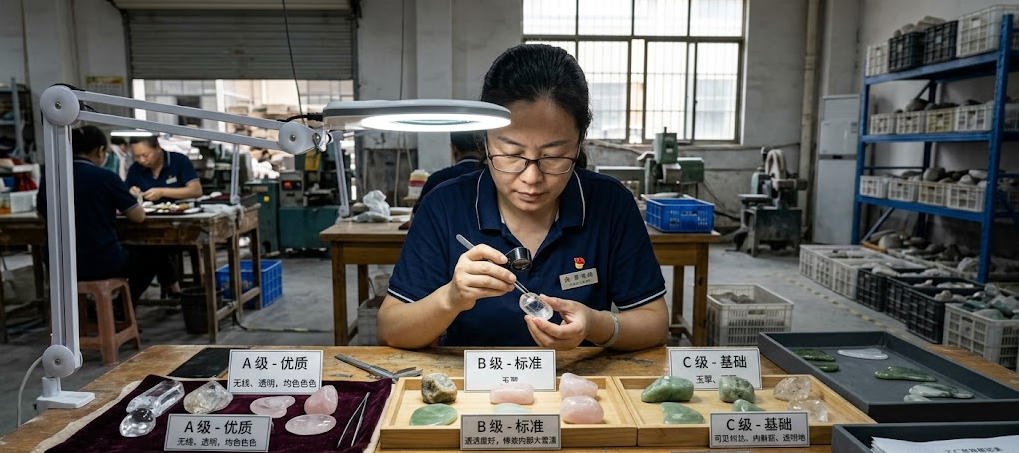
You don’t have to take a factory’s word for what “Grade A” or “high clarity” means. Independent gemological references define these terms the same way across the industry, which means you can hold your supplier’s language up against a public standard — and checking that alignment is one of the simplest ways to manage gua sha wholesale risks before goods ever leave the factory.
How Independent Labs Define Clarity and Color
Organizations such as the International Gem Society describe clarity grading for colored stones in terms of inclusion visibility and impact rather than a single pass-fail line, while the Swiss Gemmological Institute SSEF has operated as an independent gem-testing laboratory since 1972, publishing standardized terminology for color, clarity, and origin assessment used across the trade. Neither organization tests gua sha tools directly, but the underlying vocabulary — inclusion density, transparency grade, color saturation — is the same language a disciplined gua sha manufacturer should be using internally to sort rough and describe finished batches to you.
Why This Matters for Every Gua Sha Wholesale Order
When your contract specifies “Grade A” or “high transparency,” you now have a way to ask a follow-up question: graded against what reference, and by whom? This means you can request that your supplier’s internal grading criteria be described using recognized gemological vocabulary rather than in-house marketing language, which gives you a shared standard both sides can point to when a shipment is being evaluated. A supplier that welcomes this question is telling you something about how seriously they take their own grading process, and it’s a reasonable filter to apply to any guasha tools manufacturer you’re vetting for a first order, not just a repeat one. Consistent gua sha production and a willingness to explain grading in plain, checkable terms tend to travel together.
Twelve Years Supplying the Gua Sha Wholesale Market From the Factory Floor
Built as a Gua Sha Manufacturer, Not a Trading Company
The approach described above — rough-source stability, tiered grading, retained samples, and three-stage quality checks — is the daily operating process at Deyi Gems, where more than twelve years have gone into processing, designing, and manufacturing natural crystal and jade gua sha tools from raw material through to finished product. Because gua sha production happens in-house rather than through a trading intermediary, your grading requests, retained-sample checks, and Golden Sample confirmations go directly to the people cutting and polishing your order, not through a third party relaying instructions. That’s a structural difference worth asking about with any guasha tools manufacturer you’re comparing: does production happen on-site, or does your order pass through hands that never touch the rough material at all? If you’re evaluating suppliers for an upcoming gua sha wholesale order, ask for a retained sample from a previous batch and a written grade specification before you commit — a gua sha manufacturer confident in its process will hand both over without hesitation, and you’ll know within one conversation whether you’re dealing with a factory or a middleman.
FAQs About Deyi Gems Batch VAriation
1. Why do gua sha wholesale batches from the same supplier still look different?
Natural stone forms unevenly underground, so color, clarity, and texture shift even within one mine. A gua sha manufacturer can select rough within a target range, but cannot make two batches chemically identical.
2. How can I lower gua sha wholesale risks before ordering?
Ask for a written Golden Sample, specify material grade (not just material name) in your contract, and request that rough material be locked early for large or recurring orders.
3. What’s the difference between material name and material grade?
“Rose quartz” only names the stone; grade defines color range, clarity, and inclusion tolerance. A guasha tools manufacturer sorts rough by grade, so grade—not name—predicts what actually ships.
4. What does a retained sample do for repeat orders?
It’s a physical reference tied to a batch number. Your next order gets checked against it directly, keeping gua sha production consistent across reorders instead of relying on memory or photos.
5. Are IQC, IPQC, and OQC required for every batch?
Reputable factories run all three: IQC checks incoming rough, IPQC monitors cutting and polishing, OQC inspects finished goods before shipping—catching problems before they reach your warehouse.