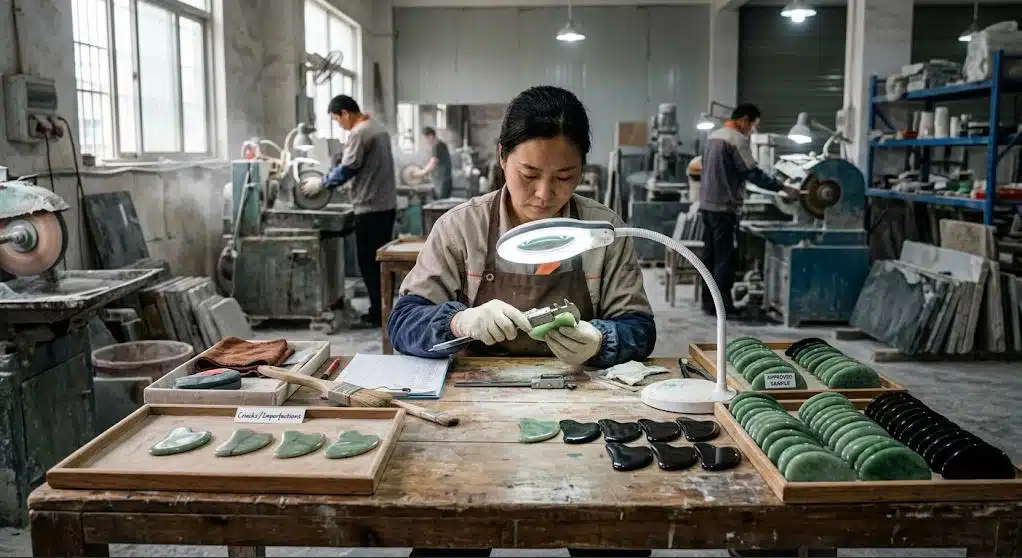
When a batch of gua sha tools comes back with hairline cracks, uneven polish, or a green that doesn’t match the sample you approved, the sticker price of the defect is almost never the real cost. The American Society for Quality has found that quality-related failures typically consume 10% to 20% of a gua sha manufacturer‘s sales revenue once rework, re-shipping, and customer service hours are added on top of the defective units themselves (ASQ). Gua sha quality problems behave the same way on both sides of a purchase order. If you’re sourcing for your own brand, a defect rate of two or three percent can turn into a bill several times larger than the product itself. If you’re running the factory floor, that same defect eats CNC time, polishing labor, a production slot that belonged to someone else’s order, and often a gua sha after sale bill that lands weeks later. Neither side gets to walk away clean — which is exactly why this deserves a look from both directions before it happens, not after. That’s the core of every gua sha quality conversation this article walks through.
- Why Gua Sha Quality Problems Are Never a One-Sided Risk
- What Gua Sha Quality Failures Cost You as a Gua Sha Wholesale Buyer
- What Gua Sha Quality Failures Cost the Gua Sha Manufacturer Behind Your Order
- The Hidden Cost Nobody Puts in a Contract: Deciding Who's Responsible
- How to Turn Gua Sha Quality Into a Standard You Can Actually Check
- How We Run Gua Sha QC on the Production Floor Before You Ever See a Sample
- Why Natural Material Variation Is Part of the Deal, Not a Flaw in Gua Sha Quality
- FAQs About Gua Sha Qc Important
Why Gua Sha Quality Problems Are Never a One-Sided Risk
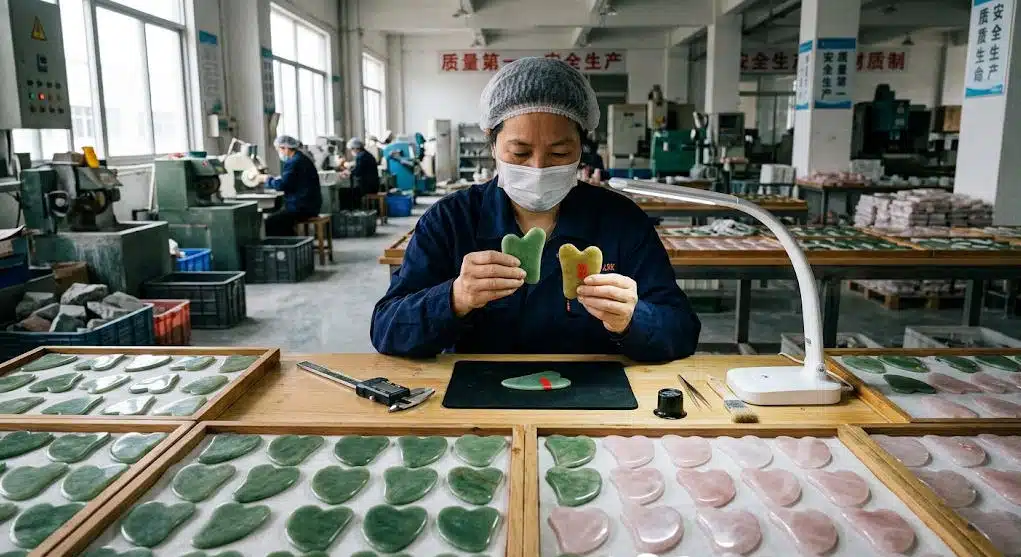
A cracked stone, a shade of green that doesn’t match last month’s shipment, a rough edge that catches on skin — none of these are simply cases of “the product doesn’t look good enough.” For a gua sha wholesale buyer, a batch with visible cracks, color mismatch, size deviation, rough edges, or shipping damage works its way quietly into sales numbers, inventory turnover, and how your customer feels about the brand printed on the box. That’s not a minor side effect. It’s a direct hit to the figures you report at the end of the quarter, and it rarely shows up as a single clean line item you can point to.
For the factory producing the order, the same defect shows up as rework, a second production run, a refund, extra freight, and a schedule that now has to absorb a delay nobody planned for. Put both sides together and the pattern is hard to miss: gua sha quality control isn’t an after-the-fact customer service issue you deal with when something breaks. It’s a supply chain risk both parties are exposed to at the same time, from the moment raw material gets pulled off the shelf to the moment your customer opens the box at home.
This is worth stating plainly, because most sourcing conversations still treat gua sha quality as something to handle “if something goes wrong.” That framing quietly shifts the entire cost onto whichever side notices the problem first — usually you, since you’re the one facing the end customer. This means you can stop treating gua sha quality control as a post-shipment fire drill and start treating it as a shared cost that both sides have a genuine incentive to reduce before production even starts, not after the container has already left port.
A single gua sha quality failure rarely stays contained to the pieces that are visibly cracked or off-color. Once one customer flags a defective piece from a batch, the next question is almost always whether the rest of that batch can be trusted — and answering that question honestly is expensive no matter which side of the supply chain has to do it. Ask yourself how many of your current supplier conversations define gua sha quality with a number instead of an adjective. If the honest answer is “not many,” you’re not alone, and that gap is precisely where gua sha quality disputes tend to start.
What Gua Sha Quality Failures Cost You as a Gua Sha Wholesale Buyer
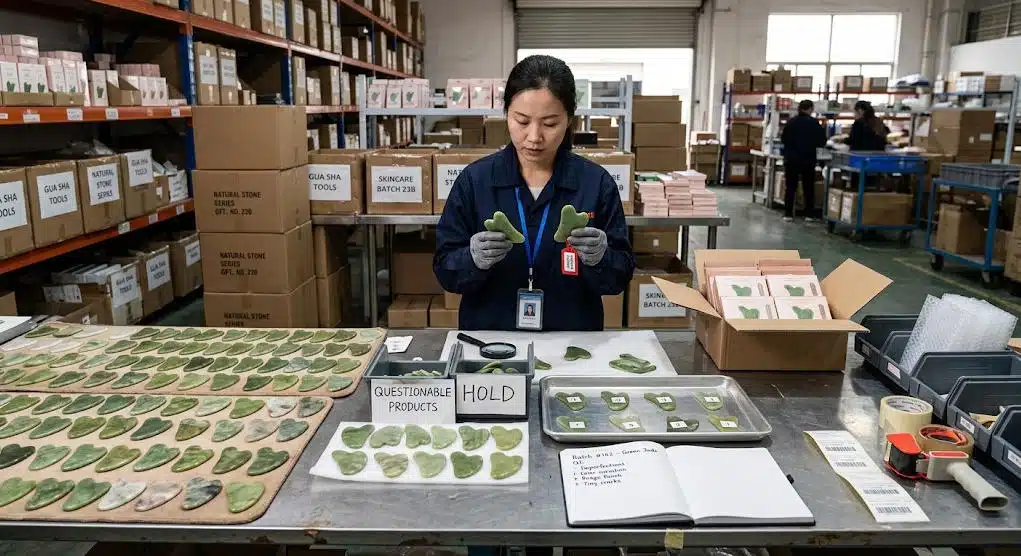
If you buy gua sha tools at any real volume, the failure mode you should worry about isn’t the occasional broken piece in transit. It’s the cost that stacks up after the defect is already sitting in your warehouse, your 3PL, or your retail channel. A gua sha wholesale order that looked clean on paper can turn expensive fast once a gua sha quality issue surfaces downstream. A tighter gua sha QC checkpoint upstream is usually what keeps that order from turning into one.
The Line Item Nobody Puts in the Purchase Order
When you receive gua sha products with a gua sha quality problem, the loss is rarely limited to the value of the defective pieces. If the goods have already entered an overseas warehouse, a third-party logistics center, or a retail shelf, discovering the issue later means you may also absorb the cost of re-sorting and re-inspecting stock, return or exchange logistics, freight for replacement units, extra warehousing time, labor for reprocessing, and repackaging. This means you can end up paying for the same unit of inventory two or three times over before the customer ever gets a usable product. A defect rate that looks like “just a few percent” on a spreadsheet can generate costs that run well past the value of the product itself, which is exactly the pattern ASQ describes when hidden failure costs outweigh the visible ones (ASQ). This is precisely the class of cost a documented gua sha QC checklist is designed to catch before the goods ever leave the factory.
When Natural Stone Variation Turns Into a Customer Service Ticket
Gua sha is a visually direct product. Cracks, obvious color mismatch, rough burrs, uneven edges, or inconsistent polish are easy for a customer to spot the moment they open the box. Natural jade and crystal carry variation that most consumers don’t fully understand going in, so without a gua sha quality standard set before the order ships, a fairly ordinary sequence tends to play out: the consumer assumes the piece is defective, your brand has to explain the material, your gua sha after sale team spends time on it, a refund or replacement follows, and your business absorbs the cost. What started as a manufacturing-side variance quietly becomes a customer service expense that sits entirely on your side of the ledger. This means you can prevent a large share of these tickets simply by defining, in writing, what “normal” natural variation looks like before the product ever reaches a customer’s hands.
Gua Sha Quality Consistency Across the Whole Batch, Not Just the Sample
If a batch shows a meaningful quality-consistency problem, you usually can’t just pull the handful of pieces a customer complained about and call it solved. Picture an order of 5,000 natural stone gua sha tools where color, dimensions, and surface finish vary more than expected — at that point you may need to re-check the entire batch rather than treat each complaint as an isolated case. Batch consistency is, in practice, one of the more important components of gua sha quality control, and it’s also one of the hardest to catch from a small pre-shipment sample if that sample wasn’t pulled and measured systematically as part of a documented gua sha QC protocol.
Your Brand Takes the Hit, Even When the Factory Caused It
If you sell under your own brand, your customers generally don’t distinguish between “the factory’s problem” and “your problem.” They see your name on the packaging, not the gua sha manufacturer‘s. So even when a third-party factory produced the batch, a gua sha quality failure still lands on your brand reviews, your repurchase rate, and how reliable your products seem to the people buying them. That’s a good reason to treat your supplier’s gua sha QC process as an extension of your own brand standards, not a separate concern that belongs to someone else.
What Gua Sha Quality Failures Cost the Gua Sha Manufacturer Behind Your Order
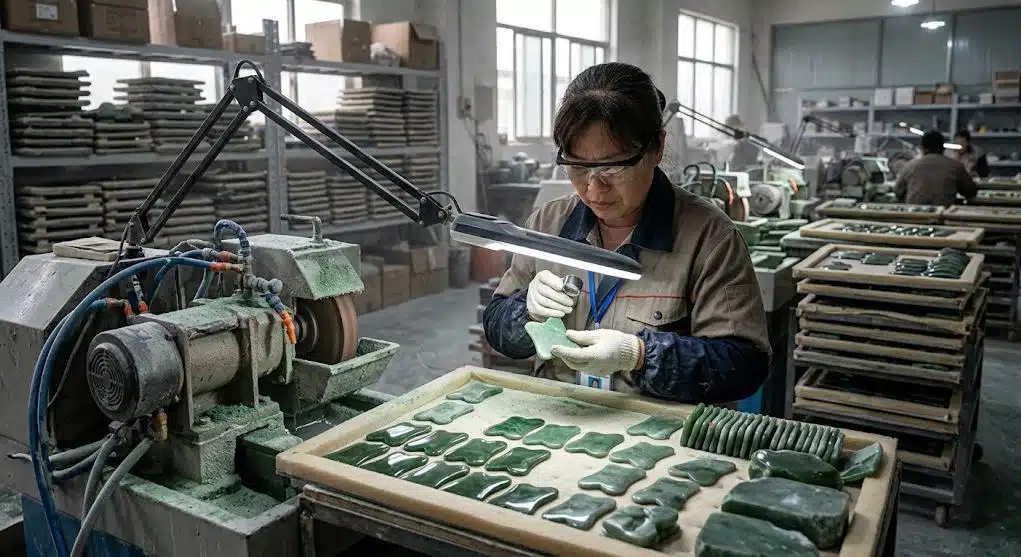
It’s worth looking at this from the other side of the table too, because the incentives line up more than most buyers assume. A gua sha manufacturer absorbs a different but equally real set of costs when gua sha quality slips, and understanding that cost structure is useful context when you’re evaluating who you want producing your next order.
Rework Costs More Than the Second Attempt
When a product comes out with an uneven edge, insufficient polish, an out-of-tolerance dimension, a wrong logo, or incorrect packaging, the factory may need to reprocess or re-manufacture it. Natural stone adds a complication that synthetic materials don’t have: some defects simply can’t be fixed with a second pass. If the raw material itself contains a hidden crack, internal inclusion, or structural weakness that only becomes visible partway through processing, a meaningful amount of machining time has often already been spent on it. This means a gua sha manufacturer loses not just the raw material, but the CNC time, grinding, polishing, and inspection labor already invested in a piece that can no longer be sold as first-quality, no matter how careful the gua sha QC inspection is afterward.
Natural Stone Defects That Surface Too Late in the Gua Sha Quality Process
This is the part of natural-material manufacturing that catches inexperienced buyers off guard: not every flaw is visible at the raw-block stage. A stone can look clean before cutting and reveal a fracture line only after shaping, at which point the labor cost is already sunk. This is precisely the distinction that gemological grading bodies such as GIA and the International Gem Society have spent decades formalizing for natural gem materials — separating genuine structural flaws from ordinary natural characteristics that don’t affect durability. Applying that same discipline earlier in the gua sha quality process, at material selection rather than final inspection, is what actually reduces this category of loss. Getting this right is a core part of gua sha quality management, not an afterthought bolted onto final inspection.
One Bad Batch Can Reschedule Every Other Order in the Queue
Gua sha quality problems tend to create a chain reaction rather than a single isolated cost. A customer complaint triggers a re-confirmation of the issue, a stock check, a new production run, a second round of gua sha QC, replacement shipment, and renewed communication with the client. If the order was sizable, that replacement run can pull production capacity away from other clients’ orders, which means the damage isn’t contained to a single order — it can ripple through an entire production schedule. This means a delay caused by one buyer’s gua sha quality issue can quietly become a delay other buyers feel too, which is exactly why serious gua sha manufacturer operations treat pre-shipment QC as schedule protection, not just a compliance checkbox.
Gua Sha After Sale Logistics Can Cost More Than the Product
Once a manufacturer confirms a replacement is needed, the bill usually includes new production cost, packaging, international freight, re-labeling, and the time spent on gua sha after sale communication with the client. For lower-value products, a single round of international replacement shipping can approach the value of the goods themselves. That math is exactly why catching a problem before shipment through solid gua sha QC is consistently cheaper than fixing it afterward — a pattern that holds across manufacturing broadly, and one reason ASQ’s cost-of-quality framework treats prevention spending as the cheapest category on the list, not the most expensive (ASQ).
The Hidden Cost Nobody Puts in a Contract: Deciding Who’s Responsible
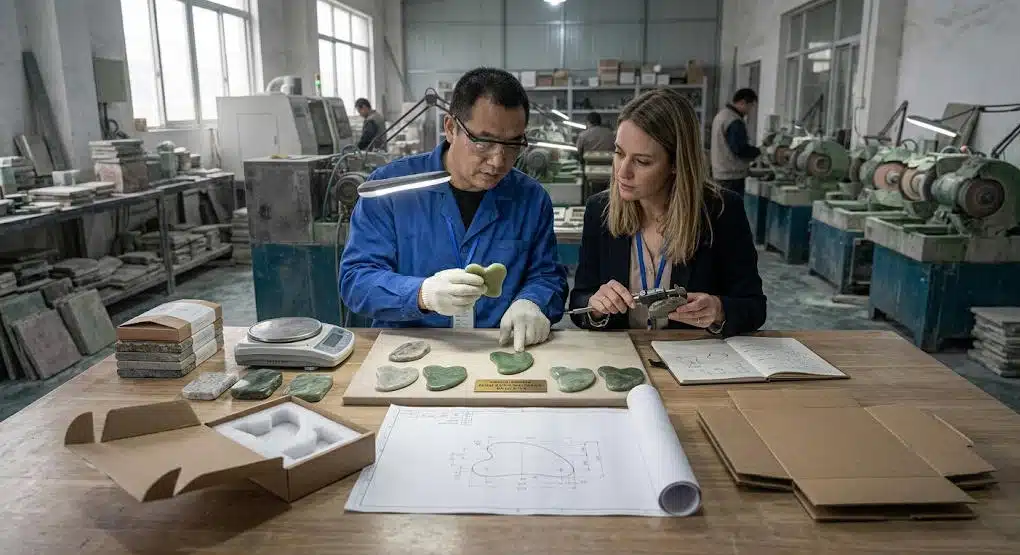
When something goes wrong, the first conversation between the buyer and the gua sha manufacturer usually isn’t about compensation. It’s about classification — what kind of problem is this, exactly? That question sounds simple until you’re actually standing in front of a pallet of stone tools trying to answer it.
Natural Texture or Crack? Where Gua Sha Quality Standards Actually Draw the Line
Is this natural texture, or is it a crack? Is this color variation part of the material’s natural range, or has it gone beyond what both sides agreed to? Is this edge condition a normal tool mark, or a processing defect? Was the damage caused during production or during transit? Did the packaging match what was confirmed earlier? Without clear answers agreed on before payment, buyer and manufacturer can walk away from the same physical object with genuinely different interpretations of what happened to it. Professional gem-grading practice offers a useful reference point here: laboratories such as SSEF built their reputation on separating a stone’s natural, expected characteristics from genuine defects using documented, repeatable criteria rather than a subjective eyeball check. Gua sha quality standards can borrow that same logic — write down what counts as acceptable natural texture and what counts as a flaw, before the first unit ships, not after a customer complains. That’s the difference between a gua sha quality standard you can point to and a gua sha quality standard you’re guessing at.
Color, Tolerance, and Transit Damage: Three Arguments You Can Avoid
A gua sha quality dispute almost always turns into a business argument the moment the standard wasn’t defined clearly enough in advance, and most of these arguments are avoidable gua sha quality gaps rather than genuine disagreements about the product itself. This means you can head off the majority of these disputes just by translating “high quality” into numbers and reference photos before the deposit is paid — a range of acceptable color, a stated dimensional tolerance, an agreed description of what “polished” actually means for that specific product. If you’re also managing platform or retail compliance requirements, this is the same documentation many buyers now request as material test reports or certificates of conformity, so treating it as a compliance artifact rather than just an internal gua sha QC note tends to pay off twice, especially once a gua sha after sale claim is already sitting in your inbox.
How to Turn Gua Sha Quality Into a Standard You Can Actually Check
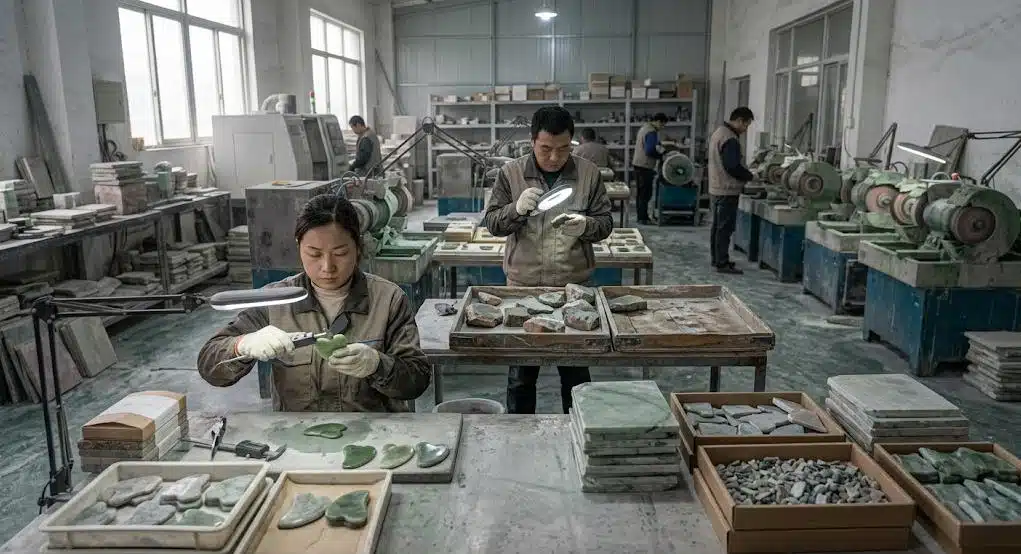
A mature gua sha sourcing process shouldn’t stop at writing “High Quality” into a spec sheet. It should convert that phrase into something both sides can physically check and compare, unit by unit, without relying on anyone’s personal judgment call, which is the entire purpose of writing a gua sha quality standard down in the first place.
Setting Gua Sha Quality Standards for Raw Material Before Cutting Starts
Start with the material itself: stone type, material grade, what counts as acceptable natural texture, whether visible cracks are permitted at all, whether internal inclusions are acceptable, and the accepted range of color variation. This is where a gua sha manufacturer with real material-sorting discipline earns its keep, because most downstream defects trace back to a raw block that should have been rejected at intake by a proper gua sha QC checkpoint rather than processed and discovered later. This means you can prevent a large share of finished-goods failures simply by tightening the standard applied at the raw-material stage, long before a single cut is made.
Dimensional Tolerance: Numbers Instead of “Correct Size”
Length, width, thickness, and weight all need a stated number and a stated tolerance — for example, 85 × 50 mm with a tolerance of ±0.5 mm, though the exact figures should be set based on what’s actually achievable for that product and confirmed by both sides rather than borrowed from a generic template. A tolerance written into the spec sheet is checkable with a caliper in under ten seconds. This means you can reject or accept a unit on the spot during inspection instead of arguing about whether it “feels” the right size. This single number does more to protect gua sha quality than an entire paragraph of descriptive language ever could, and it matters just as much whether you’re placing a small sample order or a full gua sha wholesale container.
Surface and Edge Standards You Can Verify With Your Own Hands
Decide in advance whether light tool marks on the edge are acceptable, whether the surface needs to be fully polished or can retain some natural texture, whether visible scratches are allowed, and whether minor chipping at the corner is tolerable. These are all things you can check with a hand and a loupe in about thirty seconds per piece. This means your incoming inspection stops depending on a subjective sense of “does this look right” and starts running on a checklist anyone on your team can apply consistently. Standards like these are what make gua sha quality something your warehouse team can enforce, not just something your supplier promises.
Building a Color Reference So “Similar” Means Something
For natural stone, a Golden Sample or color reference set solves most color disputes before they start: lightest acceptable, target, and darkest acceptable, mounted side by side as a physical reference both parties keep a copy of. A gua sha manufacturer then sorts raw material and performs final QC against that fixed range, instead of chasing the vague instruction to make every piece “the same color” — something natural stone was never going to deliver anyway. This means color complaints stop being a matter of opinion and start being a five-second comparison against a physical card, which is what turns color from a gua sha quality argument into a routine check.
Packaging Standards That Prevent the Claim Before It Happens
Define the individual packaging method, the cushioning material, the outer carton specification, whether pieces need to be separated from each other inside the box, and how drop or transit risk gets handled. A large share of what gets reported as “product damage” is actually packaging failure during transit, not a manufacturing defect at all. This means a modest investment in better cushioning and separation can prevent a gua sha after sale claim that would otherwise cost far more to resolve than it would have cost to avoid. For a gua sha wholesale order shipping by sea, this line item alone often determines whether a container arrives sellable or not.
How We Run Gua Sha QC on the Production Floor Before You Ever See a Sample
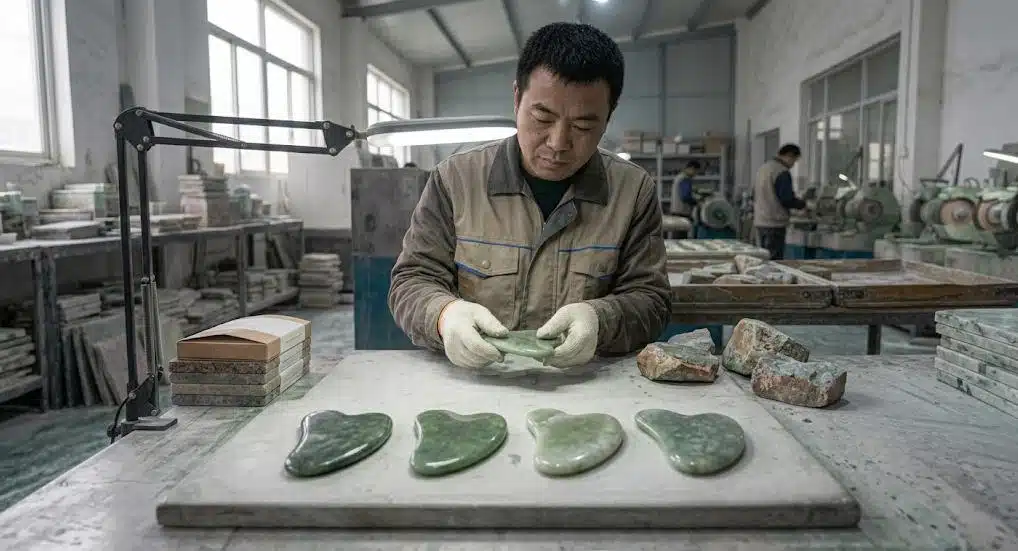
None of this works as a document alone — it has to be built into how a production line actually runs, checkpoint by checkpoint, rather than saved for a single inspection at the end.
Where Gua Sha Quality Checkpoints Sit Inside the Production Line
At Deyi Gems, raw material gets screened against a written acceptance range before it ever reaches a CNC machine, dimensional checks happen at intermediate stages rather than only at final packing, and a Golden Sample sits on the QC bench for every color-sensitive order so a technician has something physical to compare against, not just a memory of “roughly this shade.” This staged approach exists because catching a flawed piece early, before polishing and packaging labor gets added on top of it, is the difference between a small material loss and a much larger one. This means fewer surprises reach your incoming inspection, and fewer of your orders end up needing the kind of rework or replacement shipment described earlier in this article — which is the whole point of building gua sha quality checkpoints into the line itself rather than bolting them on at the end.
What This Means for Your Gua Sha Wholesale Order Timeline
For a gua sha wholesale buyer, this kind of staged checkpoint system translates into something concrete: fewer full-batch re-checks after the fact, a shorter gap between production and shipment because problems get caught while there’s still time to fix them cheaply, and a written Golden Sample and tolerance sheet you can hold onto and reference on your next reorder instead of re-negotiating gua sha quality expectations from scratch every time. It also means fewer gua sha after sale conversations you have to have at all. If you want to see what a documented gua sha quality checklist looks like before your next order, that’s a conversation worth having with whichever manufacturer is producing for you — and it’s one we’re glad to walk through in detail.
Why Natural Material Variation Is Part of the Deal, Not a Flaw in Gua Sha Quality
It’s worth closing on a point of context that gets lost in most sourcing conversations: natural jade and quartz were never going to come out of the ground identical. Reputable gemological references, including the educational material published by GIA and IGS, consistently describe color zoning and internal texture in natural stone as expected characteristics of the material rather than automatic defects — the same logic that should sit underneath any gua sha quality agreement between a buyer and a manufacturer. Consumer return behavior backs up why this distinction matters commercially: retailers already project that consumers will send back roughly 15.8% of purchases this year, worth an estimated $849.9 billion, much of it tied to mismatched expectations rather than genuine defects (NRF). A written standard doesn’t eliminate natural variation, and it shouldn’t try to. What it does is give you and your manufacturer a shared, checkable definition of where “natural” ends and “defective” begins. Whether you’re placing a small gua sha wholesale order or a container-sized one, and whether you’re working with us or another gua sha manufacturer, that shared definition is what keeps a gua sha after sale dispute from turning into a lost relationship — which, in the end, is the entire point of treating gua sha quality as something you can verify rather than something you simply hope for.
FAQs About Gua Sha Qc Important
1. How do I know if a mark on my gua sha tool is a defect or just natural stone texture?
Natural jade and quartz always carry some internal texture — that’s part of the material, not a flaw. A genuine defect is something that goes beyond an agreed range: a structural crack, a color shift outside your approved reference, or a dimension outside the stated tolerance. The fix isn’t guessing case by case. It’s agreeing on a written standard — a Golden Sample for color, a numeric tolerance for size — before production starts, so both sides are checking the same thing instead of arguing about impressions afterward.
2. What’s a reasonable dimensional tolerance for gua sha tools?
It depends on the product, but a common working range is around ±0.5mm on length and width for standard shapes. The exact number should come from what your manufacturer’s equipment can consistently hit, confirmed by both sides in writing — not copied from a generic spec sheet. Once that number exists, a caliper settles the question in seconds. Without it, every shipment risks becoming a debate about whether a piece “feels” the right size.
3. If a batch has quality problems, who pays — the buyer or the manufacturer?
Both usually absorb some cost, which is exactly why prevention matters more than assigning blame after the fact. Buyers face inventory, logistics, and customer-service costs; manufacturers face rework, schedule delays, and replacement shipping. Clear written standards agreed before payment — on material, tolerance, appearance, color, and packaging — are what determine how quickly and fairly a dispute gets resolved, instead of leaving it to interpretation.
4. How can I verify gua sha quality before placing a large order?
Start with a physical Golden Sample covering acceptable color range, request a written tolerance sheet for dimensions, and ask for photos or documentation from raw-material screening, not just the final inspection. A manufacturer with real quality checkpoints built into the production line — not just a one-time check before shipping — should be able to walk you through this without hesitation. If they can’t show you a process, that’s worth noting before you commit to volume.
5. What should a gua sha purchase order include to avoid disputes later?
At minimum: material type and grade, an agreed color reference, dimensional tolerance with actual numbers, a description of acceptable surface/edge condition, and packaging specifications including cushioning and carton standards. Writing “high quality” alone leaves too much open to interpretation. The more of this you convert into numbers and reference samples upfront, the fewer arguments you’ll have to have after the goods have already shipped.